Repeated document entry
Extract fields and route exceptions for review.
SENXOS / AI ENGINEERING
Connect documents, knowledge and workflows with source evidence, business rules and human review.
Extract fields and route exceptions for review.
Search accessible policies with source references.
Prepare actions with approval for important steps.
Test representative data and track errors.

Organize invoices, contracts and business documents with source evidence, required fields and amount checks for review.

Search permitted policies and manuals, cite sources and indicate when evidence is insufficient.
AI prepares intent and parameters; rules, permissions and approval govern execution.
Test quality, exceptions, latency and cost on representative data and compare versions.
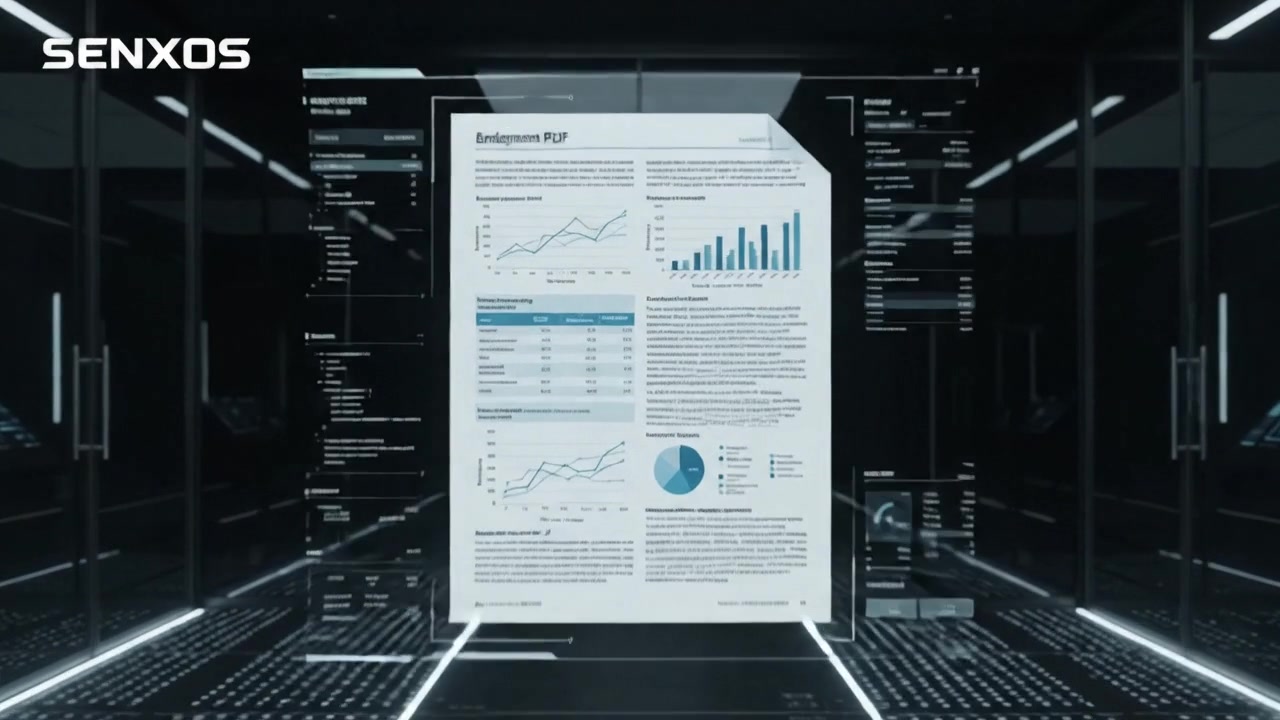
AI-generated application concepts, not customer or product screenshots.
Predefined examples and local rule checks. Fields are prepared in advance. No OCR, model inference, upload, storage or payment approval.
{
  "reference": "SX-SAMPLE",
  "lines": [
    "1250.00",
    "750.00"
  ],
  "subtotal": "2000.00",
  "tax": "120.00",
  "total": "2120.00"
}Choose an example and run checks.
Confirm what may reach models and what must remain private or masked.
Define document, data and tool scope.
Distinguish drafts from authorized changes.
Agree sources, versions, records and review methods.
AI interprets and suggests. Business systems govern data, permissions, state and execution. Evaluate cloud APIs, private or hybrid environments against requirements.
It depends on the model, deployment and data. Agree what may be shared, masked or kept internal, then check the provider’s actual processing arrangements.
Retain sources, use representative tests and rules, and route missing evidence, exceptions and important actions for human confirmation.
Not necessarily. Review the software, data and interfaces first. Integration or targeted improvements may be enough.
Prototypes and representative data help agree assumptions, usable results and scope before committing to the next stage.
Tell us the data source, current process and what makes a result usable. Assess evidence and validation before defining scope.