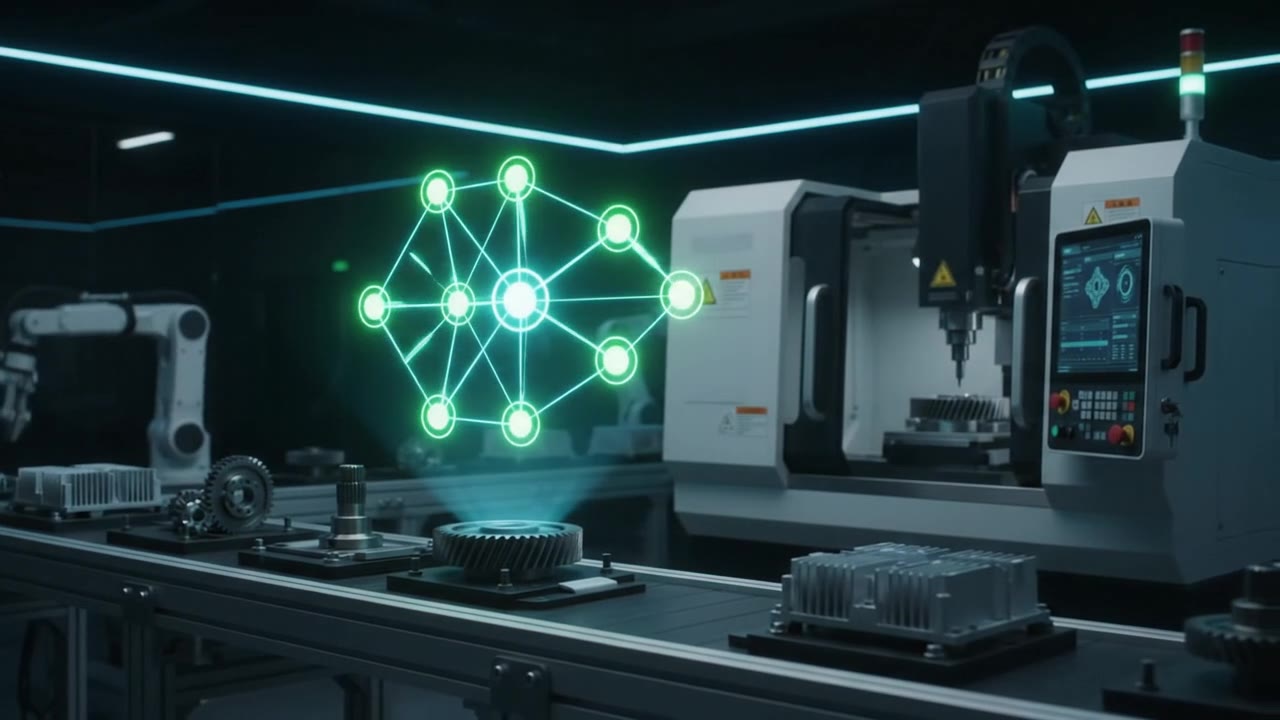
Connect engineering documents, inspection records, and review workflows so quality, engineering, and production teams can track evidence and progress around their operating needs.
AI-generated manufacturing imagery, not a client factory or equipment photograph.
Connect scattered data to a complete workflow.
Conflicting document versions make it hard to confirm which specification applies.
Inspection results are repeatedly compiled, with issues tracked by hand.
Exceptions are spread across spreadsheets and messages, obscuring owners and progress.
Disconnected quality and operational systems require the same data to be entered again.
One quality workflow. Three connected capabilities.
01
Quality exceptions and resolution tracking
Bring inspection results, exception descriptions, and documents into a consistent workflow. Clarify ownership, arrange review, and track closure, with human confirmation for important decisions.
Acceptance: assignment, review status, and complete records. Assess image recognition separately on real samples.
02
Engineering documents and version management
Organize specification, work-instruction, and inspection-document versions so people can find the relevant source and spend less time resolving conflicting information.
Acceptance: source references, version identification, retrieval evidence, and access rights.
03
Existing systems and data integration
Assess integration against the interface conditions of existing ERP, MES, and WMS systems. Connect quality information to related workflows and retain synchronization and exception records.
Acceptance: mappings, consistent states, failure handling, and duplicate-write protection.
AI organizes information. Rules define the boundary.
01
Connect data
Map documents, inspection fields, versions, and interfaces.
02
Prepare candidates
Models may assist reading and classification; retain source references.
03
Validate and review
Use specifications, permissions, and human checks for uncertainty.
04
Synchronize and trace
Synchronize after confirmation and retain processing records.
Software and workflow integration only. No equipment safety certification, direct machine control, or replacement of on-site safety procedures.
See how an exception enters the review workflow.
Switch scenarios to see alerts for out-of-range dimensions or missing specifications. Predefined sample data, not a live line. No AI, equipment, or production-system connections, uploads, or storage.
Sample inspection record
Specification version
SPEC-DEMO-R2
Nominal dimension
20.00 mm
Allowed range
19.95 mm - 20.05 mm
Measured dimension
20.09 mm
Local rule result
Outside range. Human review required; no automatic release.
Calculations use integer micrometers, displayed in millimeters. Only range and version presence are checked, not gauges, document authenticity, or quality standards.
Know what is being delivered at every step.
Align expectations through prototypes, staged delivery, test records, and operating guides, keeping progress visible and future maintenance practical.
01
Define and validate
Requirements, process maps, data and access boundaries, key prototypes, and acceptance criteria.
02
Build and integrate
A working system, interface documentation, integration tests, and exception scenarios.
03
Handover and evolve
Deployment and operating guides, maintenance responsibilities, and next steps. Agree source-code delivery and usage rights before engagement.
These are planning and acceptance considerations. Project scope is defined after discovery.
Define data boundaries before choosing technology
Data, security, and deployment belong in project design. These are discovery topics, not certifications or compliance guarantees.
Models and data flow
Identify data sent to external models, de-identification needs, and provider data-use terms.
Deployment and permissions
Assess cloud or private deployment requirements; define roles, tool access, and sensitive-action approvals.
Logs and retention
Agree required activity and error records, who can access them, retention periods, and deletion responsibilities.
First contact
Share only the problem and process overview. Do not submit passwords, API keys, personal customer data, or production records.
Questions, answered
Can you connect production equipment?+
First assess interfaces, authorization, safety and test conditions. Current website demos do not control equipment.
Can quality pass without a specification version?+
Do not guess the specification. Obtain the missing basis before evaluation and follow the site’s quality-confirmation procedures.
Can automation work without an API?+
Assess permissions and system limits. Supported exports, imports or batch files may be options; real-time connectivity is not assumed.
Why validate before development?+
Prototypes and representative data help agree assumptions, usable results and scope before committing to the next stage.
Share your goals, current workflow, and what needs to improve. We help clarify requirements, assess feasibility, and plan a suitable development approach.